OUR COASTAL TREASURE
Common Fish of St Francis Bay
The underwater habitats of St Francis Bay in the Eastern Cape are highly diverse, comprising of sandy seabeds, rocky shores, sheltered offshore reefs and some estuaries.
These areas shelter varied ecosystems providing food and spawning grounds for a large range of fish.
Fish use different habitats; a juvenile fish encountered in a rock pool may be the same species as a much larger adult on an offshore reef.
Below are just a few of the fish you are most likely to find paddling, rockpool exploring, snorkeling or fishing from shore or from a boat.
Good to know:
Before you go fishing or buy or order fish in a restaurant have a look at
the WWF-SASSI (Southern African Sustainable Seafood Initiative) traffic-light list which helps consumers in South Africa choose sustainable seafood based on population health, the method of capture or farming, and the origin of the fish.

The Traffic Light System
- Green (Best Choice): Sustainable populations that can handle current fishing pressure. Safe to buy and eat.
- Orange (Think Twice): Reasons for concern—such as overfishing, depleted stocks, or high bycatch from specific catching methods.
- Red (Don’t Buy): Unsustainable populations, severe environmental damage, or species under critical threat.
- No Sale (Illegal): Species that are specially protected or illegal to sell commercially in South Africa (e.g., Galjoen, Strepie, Potato bass).
Do not infer a Green rating from the absence of a listing!
Fishing:
You need a valid permit for recreational fishing in South Africa.
Before you go fishing: Get a license and know the rules.
Apply Online: Register and apply directly on the official DFFE e-Fishing Platform. Or you can still purchase physical paper permits at designated South African Post Office (SAPO) branches.
Ten fish often encountered in St Francis waters:
1. Two-tone fingerfin or Butterfish
(Chirodactylus brachydactylus)
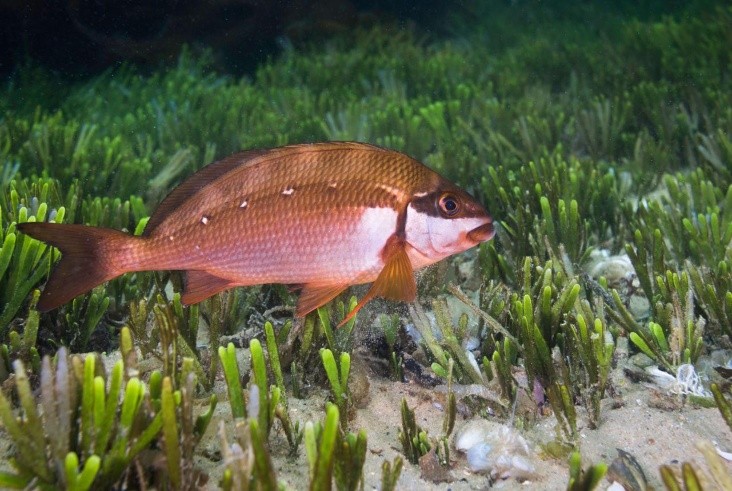
Credit: Georgina Jones; CC BY-SA 4.0
A reddish-brown fish with a paler underside, thick lips and distinctive lower pectoral-fin rays. Common length is about 25 cm; it can reach approximately 40 cm.
Where to find it locally: rocky reefs and rocky gullies around Cape St Francis and the wider St Francis coastal area. It is associated with rocky bottoms and can occur from shallow water into deeper offshore habitats.
Interesting facts
- The lower rays of its pectoral fins help explain the name Fingerfin.
- It feeds on small invertebrates.
Environmental role: it helps regulate small invertebrate populations and provides food for larger marine predators.
2. Zebra seabream
(Diplodus cervinus)

Credit: Martin Nieuwoudt; CC BY-NC via INaturalist
Local names: Zebra; some South African fishers call it a Wildeperd.
A deep-bodied fish with prominent dark vertical bands across a pale body. Adults commonly reach roughly 30–40 cm.
Where to find it locally: it is most likely to be found near rocky reefs and reef edges off Cape St Francis and the deeper rocky sections of the St Francis coast.
Interesting facts
- Its strong teeth help it feed on hard-shelled invertebrates.
- It is a different species from blacktail, despite their similar body shapes.
Environmental role: It feeds on bottom-dwelling animals and forms part of the food web linking reef invertebrates to larger predators.
RED
3. Blacktail
(Diplodus capensis)

Credit: Robert J. Koch; CC BY 3.0 via Two Ocean Aquarium
Local names: Dassie; Kolstert.
A silvery, oval-shaped fish with a distinctive dark patch near the tail. Common length is about 30 to 45 cm.
Where to find it locally: rocky shorelines, shallow reefs and gullies around Cape St Francis, as well as sandy patches between rocks. Blacktail may also occur in the lower Kromme Estuary and around the estuary mouth.
Interesting facts
- It eats a wide range of foods, including algae, molluscs and small crustaceans.
- Young fish use sheltered coastal habitats.
- It is a familiar species along the Eastern Cape coast.
Environmental role: it helps keep populations of small invertebrates in balance and transfers energy from algae and bottom-dwelling animals to larger predators.
RED
Fishing pressure and the loss of healthy coastal habitat can affect local populations
4. Southern mullet
(Chelon richardsonii)
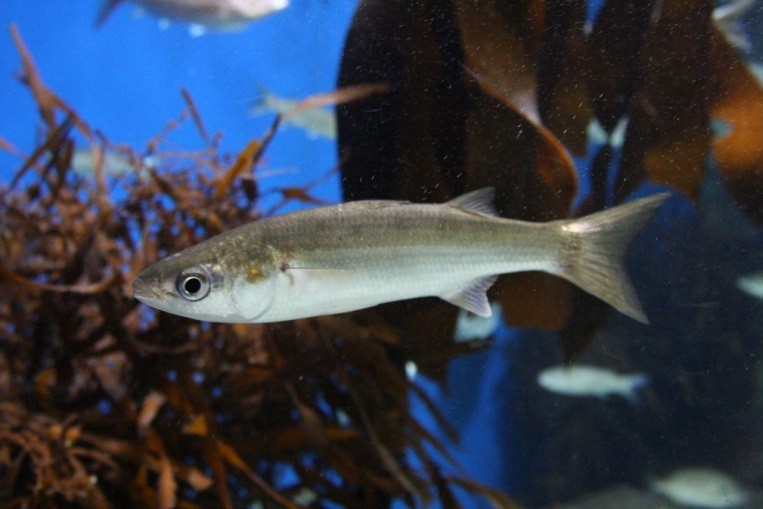
Credit: Two Ocean Aquarium
Local names: Harder.
A streamlined, silvery fish with a relatively blunt head, usually seen swimming in shoals. Adult size varies but grows up to 40 cm long.
Where to find it locally: sandy surf zones, shallow coastal water and the Kromme Estuary. The estuary’s eelgrass and open shallow areas are important fish habitats, and mullet are among the fish recorded there.
Interesting facts
- It feeds on microscopic algae, organic material and small organisms. It has delicate teeth.
- Mullet are important prey for larger fish and coastal birds.
Environmental role: it helps move energy from microscopic algae and organic material into the larger food web.
RED
Clean water and healthy estuaries are important for coastal fish.
5. Strepie
(Sarpa salpa)
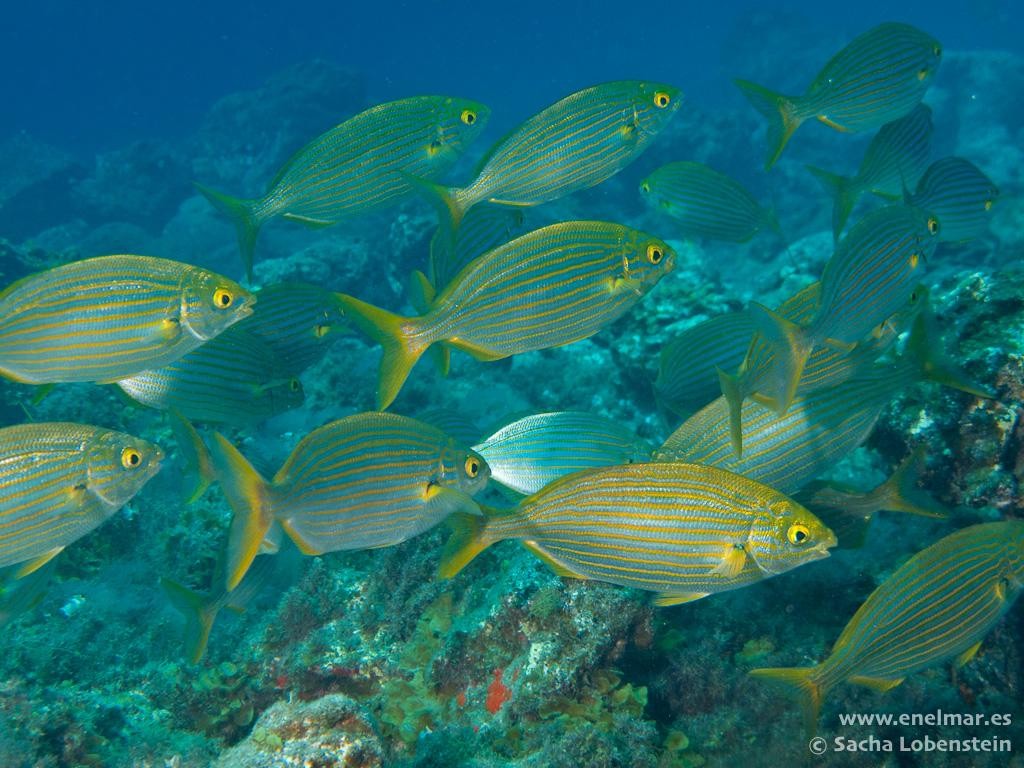
Credit: Two Ocean Aquarium
Local names: Strepie or Karanteen.
A silvery fish with several bright yellow stripes running lengthwise along its body. Adults commonly grow to around 20–30 cm, with larger individuals possible.
Where to find it locally: sandy areas, estuaries, shallow rocky reefs, seaweed-covered areas and rocky gullies around Cape St Francis.
Interesting facts
- It feeds heavily on algae and marine vegetation.
- It may graze in groups.
- It only has front teeth, no molars.
- Its diet makes it an important link between marine plants and animals that eat fish.
Environmental role: Strepies graze on algae, helping influence the balance between algal growth and other organisms on rocky reefs.
Healthy rocky reefs and algal communities are essential feeding areas
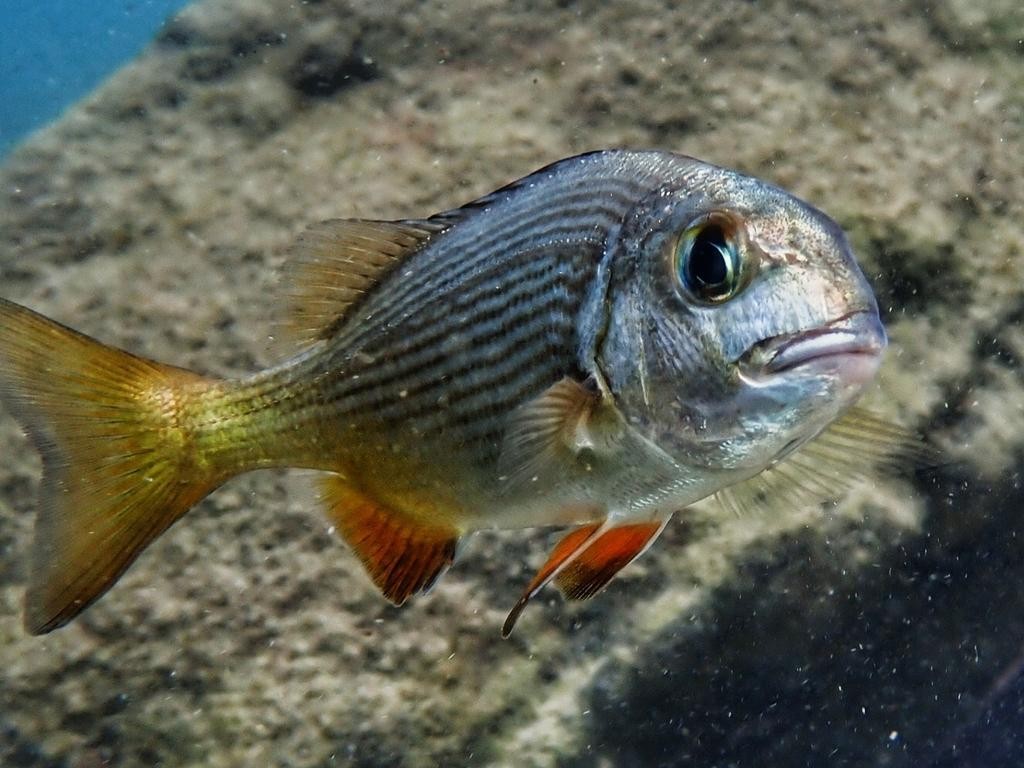
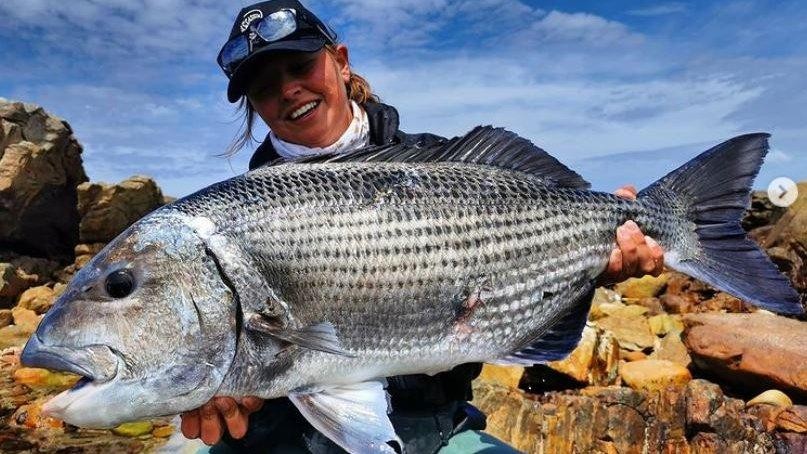
6. White musselcracker
(Sparodon durbanensis)
Credit: Henry Delange; CC BY 4.0 via Marinelifeid.com
Credit: Taryn Murray via X
Local names: White biskop or Brusher
A robust, powerful fish with strong jaws and crushing teeth. Adults may grow to around 80 cm or more.
Where to find it locally: rocky reefs and deeper reef edges off Cape St Francis and the wider St Francis fishing grounds. Juveniles are common in tidal pools where they feed on algae.
Interesting facts
- Its jaws are adapted for crushing hard-shelled prey with rows of strong molars.
- It feeds on mussels, crabs and other bottom-dwelling animals.
Environmental role: it is a significant predator of shellfish and other reef invertebrates, helping shape the composition of rocky reef communities.
RED
Large reef fish can be particularly vulnerable to fishing pressure because they often take many years to replace.
Its popularity with fishers and its dependence on reef habitat make responsible management important
7. Red roman
(Chrysoblephus laticeps)

Credit: Frederick Hermanus Van der Bank via 1KSA.org.za
Local names: Roman.
A deep-bodied, reddish-orange fish. Adults commonly measure around 30–40 cm, although larger specimens do occur.
Where to find it locally: rocky reefs and deeper reef systems off Cape St Francis and the St Francis coast.
Interesting facts
- It eats crustaceans, molluscs, worms and small fish.
- Red roman change sex as they grow: females can become males.
- They are strongly associated with rocky reef habitats.
Environmental role: Red roman are reef predators and help regulate populations of smaller animals living on the seabed.
RED
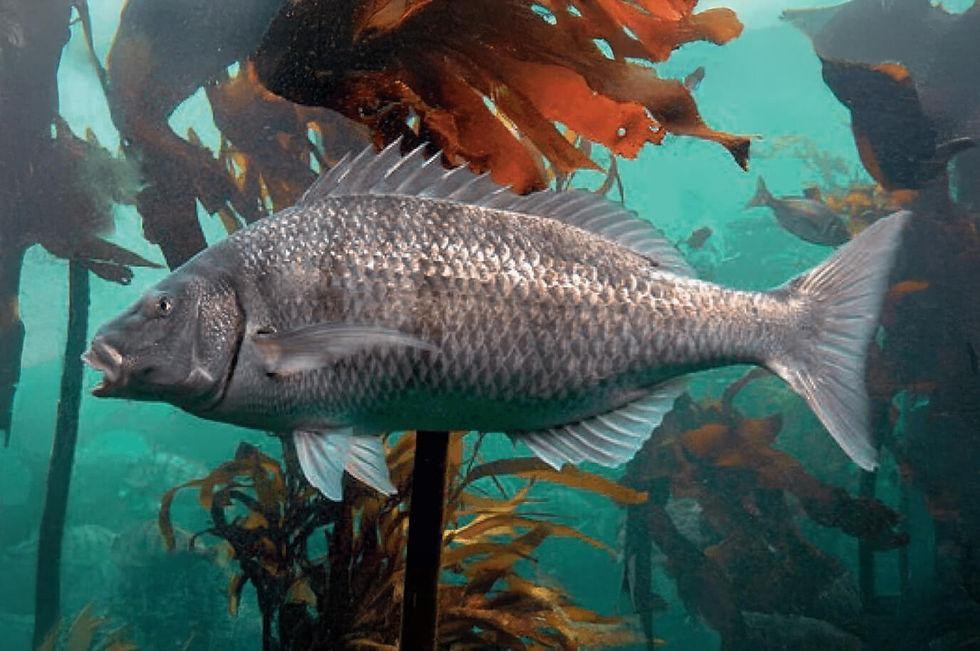
8. White steenbras
(Lithognathus lithognathus)
Credit: Frederick Hermanus Van der Bank via 1KSA.org.za
Local names: Pignose grunter, Pig or Pig nose
A long, silvery fish with a sloping head and protruding mouth. Adults can exceed 1 m in length, though smaller fish are commonly encountered.
Where to find it locally: sandy beaches and surf zones. Juveniles use estuarine nursery areas, including the wider Kromme Estuary system.
Interesting facts
- Young fish depend on estuaries during an important part of their development.
- Adults feed on worms, crabs, shrimps and other bottom-dwelling animals.
- It is a highly sought-after South African angling fish.
Environmental role: White steenbras connect estuary nursery habitats to coastal food webs and help regulate animals living in sandy sediments.
RED
This fish species is endangered because fishing pressure, slow population recovery and damage to nursery habitats are important concerns.
9. Galjoen
(Dichistius capensis)

Credit: Frederick Hermanus Van der Bank via 1KSA.org.za
Local names: Galjoen.
A deep-bodied fish with dark, mottled colouring and strong fins. Adults commonly measure around 30–50 cm, with larger individuals possible.
Where to find it locally: shallow rocky reefs, turbulent surf zones and rocky gullies around Cape St Francis.
Interesting facts
- It is South Africa’s national fish.
- Its diet includes mussels, limpets and other small invertebrates.
- Its colour can vary with its surroundings.
Environmental role: Galjoen feed on animals attached to or living among coastal rocks, making them part of the ecological balance of rocky shores.
RED
South African recreational fishing regulations have a closed season for catching this fish.
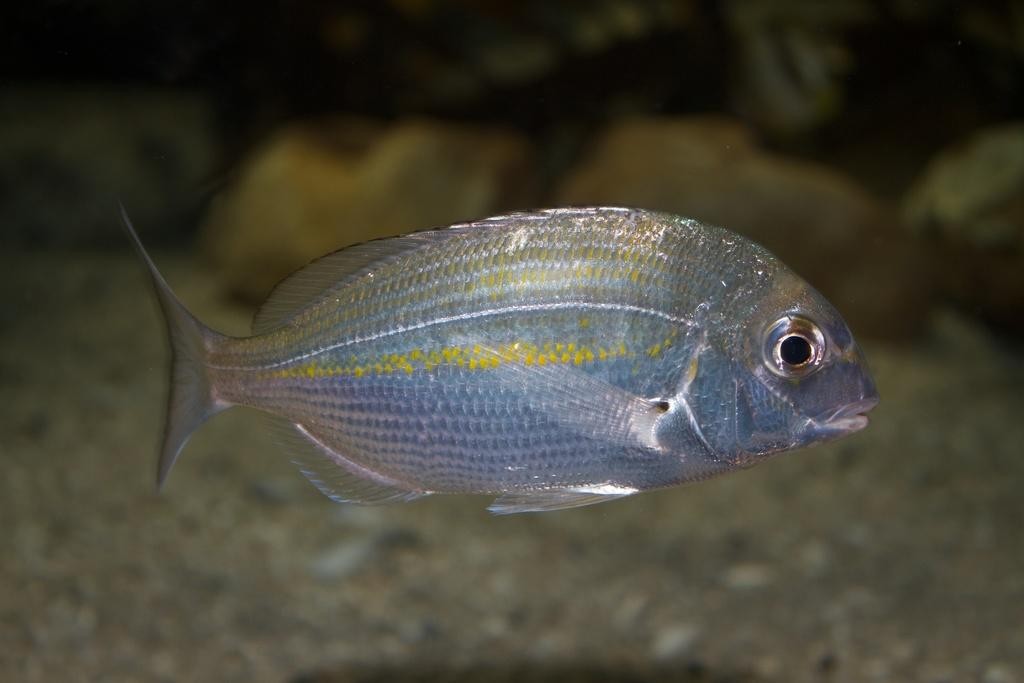
10. Cape stumpnose
(Rhabdosargus holubi)
Credit: Brian Gratwicke; CC BY 2.0 via Marinelifeid.com
Local names: Fatty
A deep-bodied, silvery fish with a yellow line along each side. Adults commonly grow to around 20–30 cm, with larger individuals possible.
Where to find it locally: shallow sandy areas, seagrass beds and the Kromme Estuary. Young fish use sheltered estuarine habitats, while adults can also be found in coastal water.
Interesting facts
- It feeds on small crustaceans, shellfish and other bottom-dwelling animals.
- It links sheltered estuary habitats with the open coast.
Environmental role: Cape stumpnose help transfer energy from small invertebrates and algae to larger fish and other predators.
RED
Healthy estuaries and seagrass beds are important for juvenile fish.
Invitation:
We invite photographers and fishers to submit photographs and to report on local fish, fish names and further interesting facts about our local fish.
Contact: secretary@stfranciskrommetrust.co.za