OUR COASTAL TREASURE
Marine Life of St Francis Bay
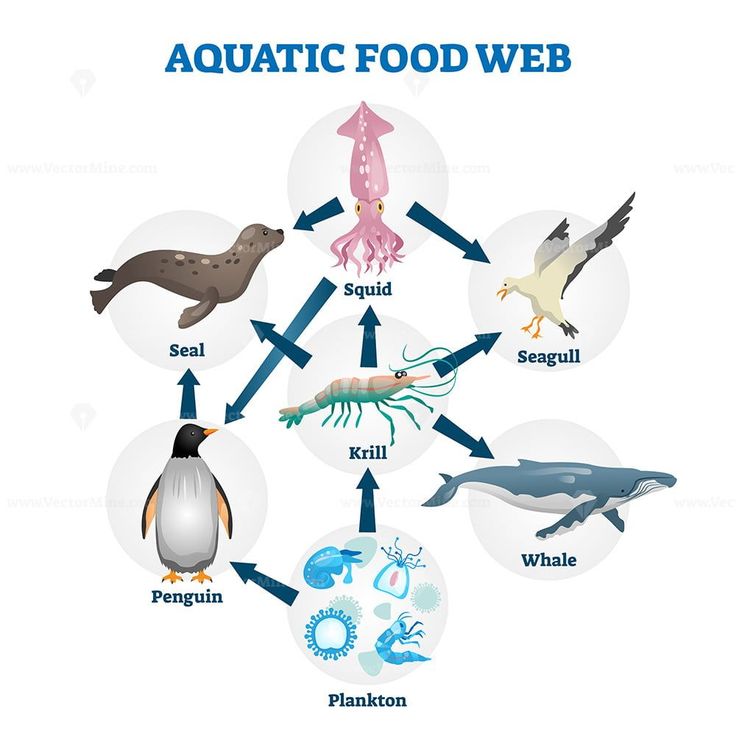
St Francis Bay is a very productive body of water. Winds blowing from the east and northeast upwell water from the deep. This water is very cold (10 ͦ C) but loaded with nutrients which, once exposed to the sunlight, will cause an explosion of algae to grow.
These algae feed many microscopic animals (zooplankton), which in turn attract predators such as squid, shoals of pilchards and other fish.
Flocks of gannets, penguins and other sea birds feast on the fish. So do game fish, seals, otters, dolphins, some whales and sharks (mostly harmless to humans). Food for all readily available!
Alternatively, when the west wind blows water temperatures may rise as high as 24 ͦ C. The area is therefore situated in a temperate region, known as the Agulhas Marine Province. The marine flora and fauna tends to be a mixture of the more tropical climate of the east and the desert conditions along the west coast.
Hence, our marine environment is one of the most varied in the world.
This chapter provides more insight in the life forms in our bay.
Whales of St Francis Bay
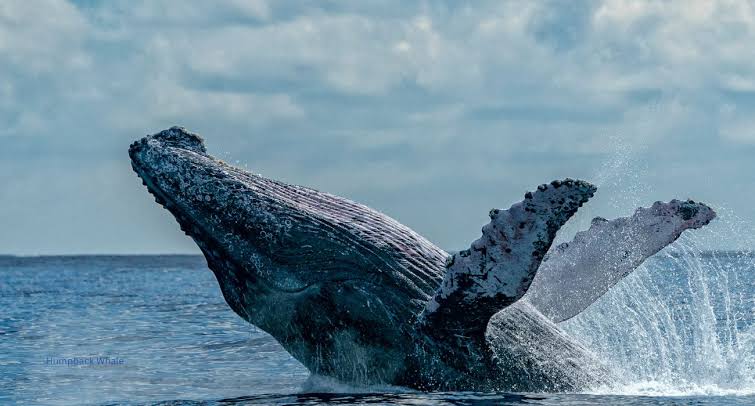
Four types of whales visit St Francis Bay every winter.
- Southern Right Whale
- Humpback Whale
- Orca or Killer whale
- Bryde’s Whale
Whales (Cetaceans) are warm-blooded mammals (not fish).
They need air and must surface to breathe; they first expel air and water vapour in a spout before they can breathe in fresh air.
Whales can grow very large because the sea supports their weight. A Blue whale weighs as much as 40 elephants.
A thick layer of fat (blubber) under their skin protects the whales from icy water temperatures.
Whales (and dolphins) are very sociable and use many different sounds and songs to talk to each other. These sounds can be heard by other whales many kilometers away.
Many whale species were hunted to near extinction for their blubber and oil. Some populations have recovered due to responsible hunting management. Environmental issues such as plastic and oil pollution constitute a new threat to whales around the world.
Preservation of the whale population in our oceans will help to reduce the effects of climate change. The iron rich faeces of whales who feed on krill promotes the growth of phytoplankton binding carbon.

Toothed Whales and Baleen Whales
Orcas are part of a group of whales that have teeth and live on a diet of squid, fish, birds, seals, sharks, dolphins and even other whales.
Southern Right, Bryte’s and Humpback Whales have combs of horny hair called baleen plates hanging from their top jaw. Tiny food particles (Plankton or Krill) are filtered from seawater through these plates.
Plankton is made up tiny animals that live in huge swarms in the sea and are an important food source for fish and whales. Krill looks like tiny shrimps.
A large whale can eat over 3000 kg of food a day. (Imagine a 3 tonnes truck!). A whale eats for about 120 days in the cold regions. They store fat as blubber under their skin. They live mainly on this fat when they travel north to calf.
In the Southern summer Southern Right Whales and Humpback Whales migrate south to sub-Antarctic waters to feed. Krill proliferates in the light of the sun that reaches the poles at that time of the year. They return to our warmer waters in June to December to give birth and allow their young to gain weight in preparation for their first trip to the cold sub-polar regions.
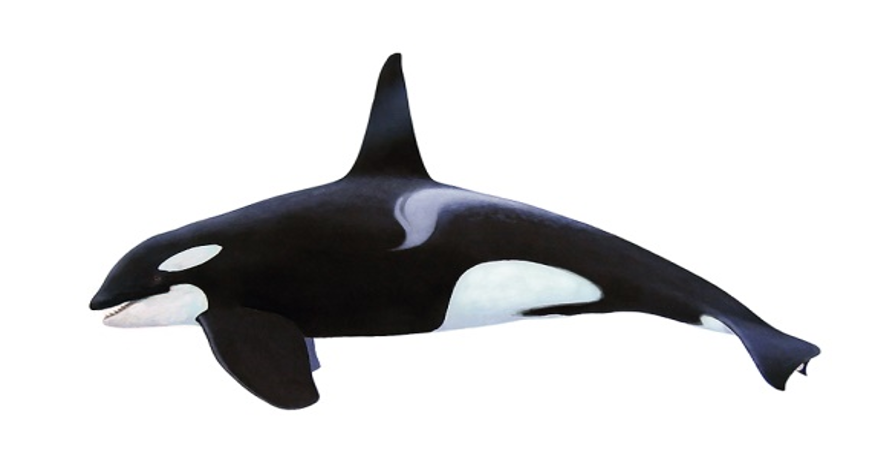
Orca or Killer Whale Orcinus orca
Length: 9 meter Weight: 8 000 kg (8 tonnes)
Features: Orcas have a huge dorsal fin (The fin on the back.). The body is stout and shiny-black with white markings. Large teeth can be seen in the open mouth.
- Orcas hunt in organised groups, known as pods, made up of several generations of related whales. Adults teach the juveniles hunting techniques such as how to use waves to wash seals of ice.
- Each pod consists of a mature female and her female offspring and relations who communicates in their own “dialect” of various whistling sounds.
- Orcas are pregnant for 13 -16 months before giving birth. Calves suckle for over a year from the mother. Some live for 80 years.
- The orca feeds on squid, fish, birds, seals, sharks, dolphins and even other whales.
- These whales can be seen year-round in South African waters.
- This “killer” whale is actually the largest member of the dolphin family.

Humpback Whale Megaptera novaeangliae
Length: 15 meter Weight: 35 – 45 tonnes
Features: They have long, usually white fins and a black and white body. Humpback whales have grooves on their throats (These allow them to enlarge the space in their mouth when feeding). They have a small dorsal fin on top of a hump on the back of the animal. The head and lower jaw sport rows of tubercles (bumps).
- Humpback whales are spotted in June-July as they migrate up the east coast to calve and mate off the coast of Mozambique and Madagascar. They return between September and December on their way to the Southern Ocean,
- Humpbacks are able to launch their entire body clear of the water (breaching).
- The males sing songs which can last up to 20 minutes. These songs are learnt and passed on to other whales in a specific population.

Southern Right Whale Eubalaena australis
Length: 16 meter Weight: 65 tonnes
Features: No fin on the back of the body. The body is grey/black, sometimes with white patches on underparts. The head is covered in irregular, bumpy growths called callosities. Has a distinct double “V”-shaped spout when it blows.
- Found in pods of up to 6 individuals, which is usually a family unit.
- Adult females visit our coast from June to December. Calves of about 6 meter long are born in South African waters after a gestation period of 12 months and drink up to 600 liters of milk per day.
- The Southern Right Whale moves quite slowly and likes to glide and roll on the surface. It is easy to catch and therefore was considered the right whale to hunt.
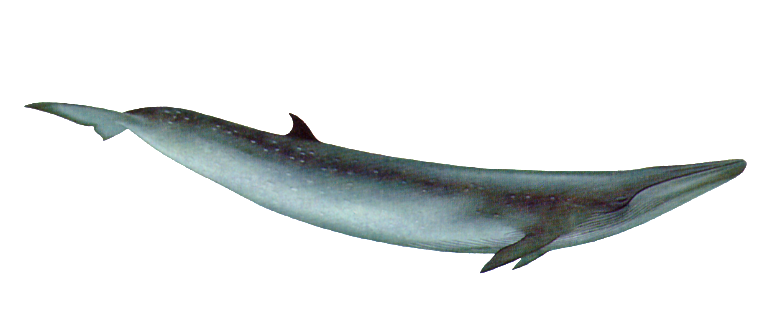
Bryde’s Whale Balaenopterida edeni
Length: 14.5 meter Weight: 18 tonnes
Features: The body is slender and elongated with a pointed head. The dorsal fin is situated two-thirds along the back. Black or dark grey with white patches on the throat and chin. Has three distinctive ridges that run from the tip of the broad rostrum (upper jaw) to the rear of the head, level with the two blowholes.
- Bryde’s whales feed on schooling fish such as pilchards and sardines as well as crustaceans and squid. They often lunge from below into a shoal of fish that have been herded into a bait ball by dolphins
- They are present in our waters throughout the year but are not easy to spot. If you see a patch of diving birds keep an eye out for this whale.
- About 45 throat grooves (rorquals) extend to the navel. These throat grooves allow more water and fish to be retained.
References:
Branch, G.M., Griffith, C.L., Branch, M.L., Beckley, L.E., (1994) Two Oceans, A guide to the marine life of Southern Africa, David Phillip Publishers (PTY) Ltd., Claremont.
Branch, Margo (Ed.), (2001) Coastcare Fact Sheet Series, Department of Environmental Affairs and Tourism, Cape Town.
Frances, Peter (Ed.), (2020) The Science of the Ocean, The secrets of the seas revealed, DK Penguin Random House, London.
African Penguin (Spheniscus demersus)

CLASSIFIED AS CRITICALLY ENDANGERED BY THE IUCN RED LIST AND LISTED AS A PROTECTED SPECIES
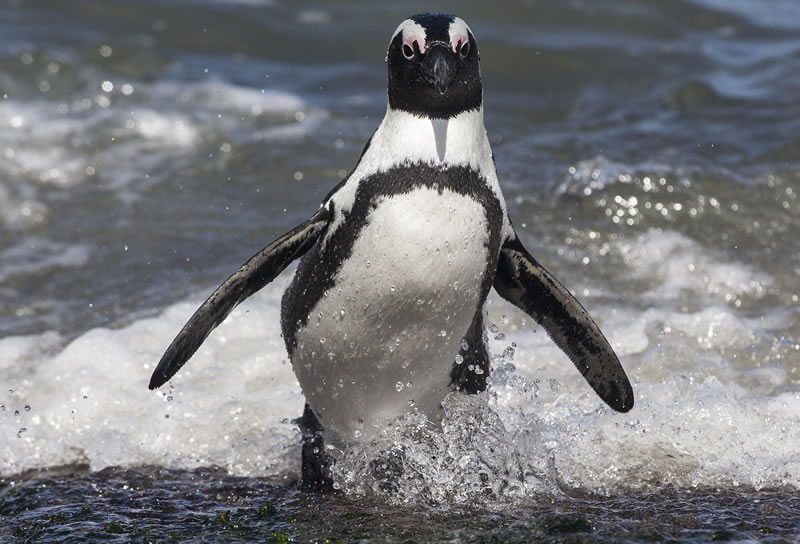
The African penguin is only found in Southern African waters. When you hear their call, you will know why it is also known as the Jackass penguin.
- The African penguin is a flightless bird and the only penguin endemic to the coastal areas of Southern Africa. A fully grown bird measures about 60 cm.
- The body is streamlined, with wings modified to resemble flippers, which enable the penguins to be efficient swimmers.
- The thick insulating coat of overlapping feathers assists with waterproofing and wind resistance.
- Penguins live together for safety and to herd fish under water.
- They built their nest on a soft surface where they dig a small burrow. The female lays two eggs. Often only one chick survives. Both parents look after the eggs and the chicks. They need protection against predators such as Kelp gulls.
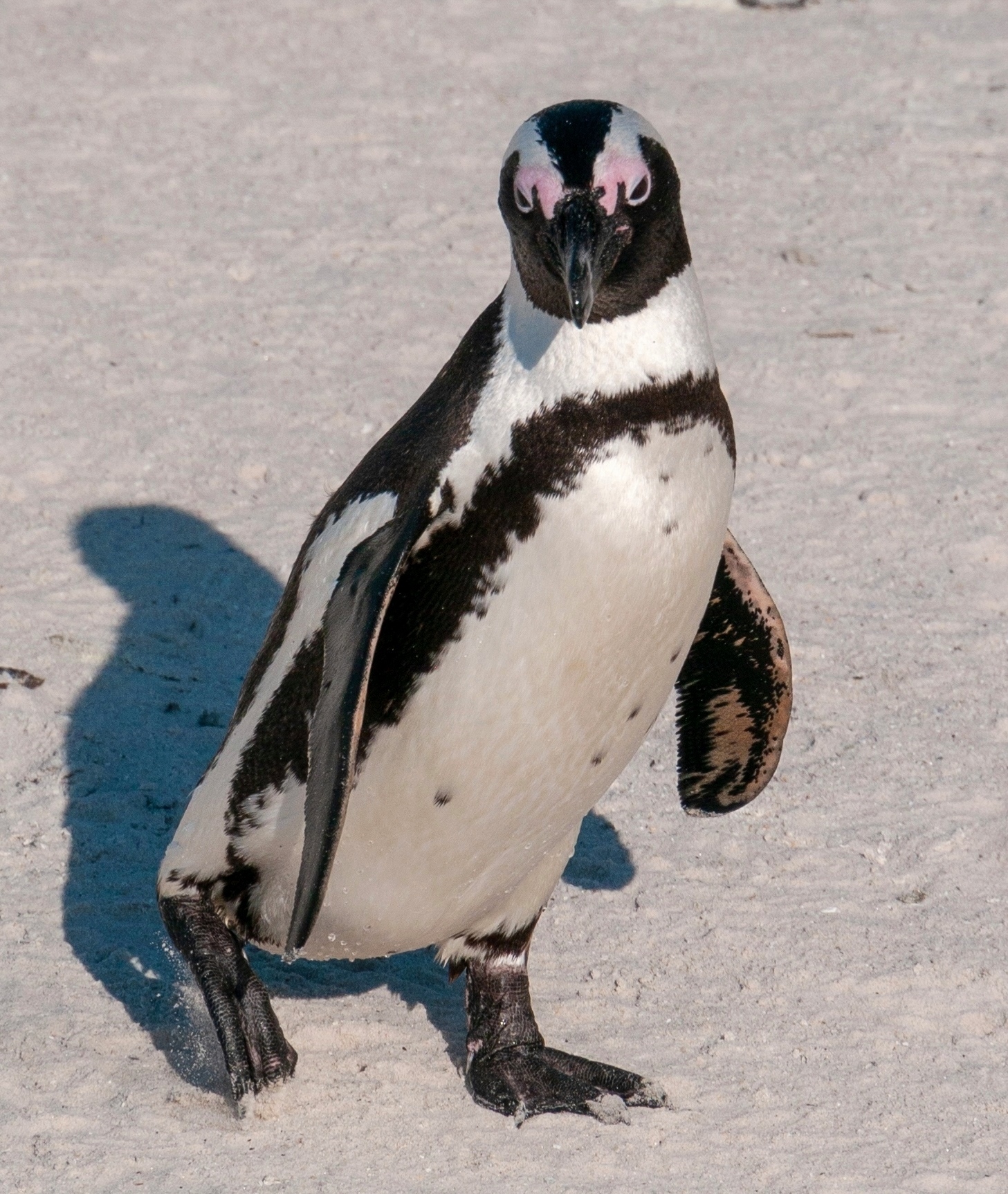
- In November the birds moult in a so-called catastrophic moult. They can’t swim or feed for about three weeks. They are, at that time, land-bound and are entirely dependent on body reserves, resulting in a 40–50% loss in body mass over the moult period.
- A penguin will starve if they do not begin their moult with sufficient fat reserves to complete it and need sufficient fish stocks once they return to sea.
Threats to African penguins
Poor foraging conditions during the post-moult recovery period can have carry-over effects into the following breeding season. Insufficient food resources have serious negative consequences on individual fitness and associated population growth.
The African penguin has experienced a rapid population decline (97%) due to commercial fishing, climate change, habitat loss and oil spillages.
There are now less than 10 000 breeding pairs. If trends persist the species will be extinct by 2035.
The decline has an impact on our marine ecosystem and on South Africa’s ecotourism and economy.
There are 17 colonies in South Africa and 11 in Namibia. The largest colony is located on Dyer Island. The closest colony is located on St Croix Island, 40 km northeast of Gqeberha.
GOOD NEWS STORY FOR CONSERVATION:
BirdLife South Africa and SANCCOB won a landmark court case to mitigate the threat posed by sardine and anchovy fishing to the world’s only African penguin populations.
Negotiations with the representatives of the sardine and anchovy commercial fisheries resulted in the implementation of No-Take Zones (no fishing) around six key penguin breeding colonies helping to reverse the decline of the species.
https://sanccob.co.za/news/high-court-victory-for-the-critically-endangered-african-penguin/
Dolphins (Cetacea)
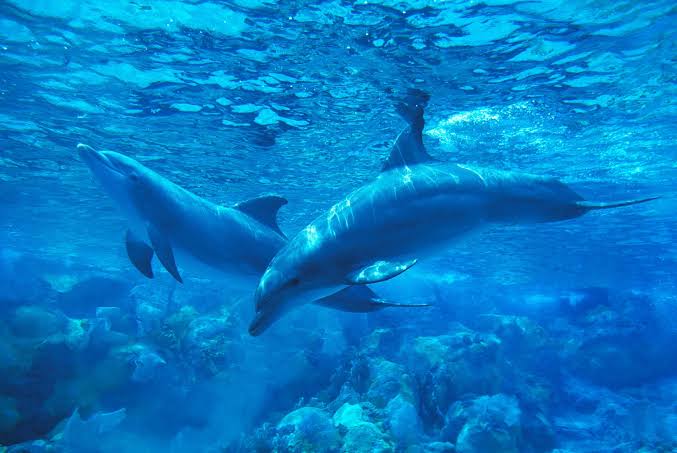
Dolphins are small toothed whales.
They are mammals, feeding their young on milk.
Dolphins use their powerful tails to propulse themselves through the water and to jump above the water. This way they can breathe while moving forward. At the same time, they survey the area for food sometimes locating birds to indicate schools of fish.
As vision under water is restricted to short distances and dolphins reach very high swimming speeds (40 kph), echo-location is used to orientate themselves when under the water.
Dolphins display a range of social behaviour amongst each other and these intelligent animals have been known to come to the aid of humans in trouble.
How to help a stranded dolphin:
Prevent the animal from overheating by shading it and wrap damp towels around tail, fin and flippers. Keep the dolphin wet but don’t let water enter the blowhole. Keep crowds and noise away.
Call the Bayworld Stranding Helpline (071 724 2122).
Three types of dolphins can be spotted regularly in St Francis Bay:
- Bottlenose Dolphin
- Humpbacked Dolphin
- Common Dolphin
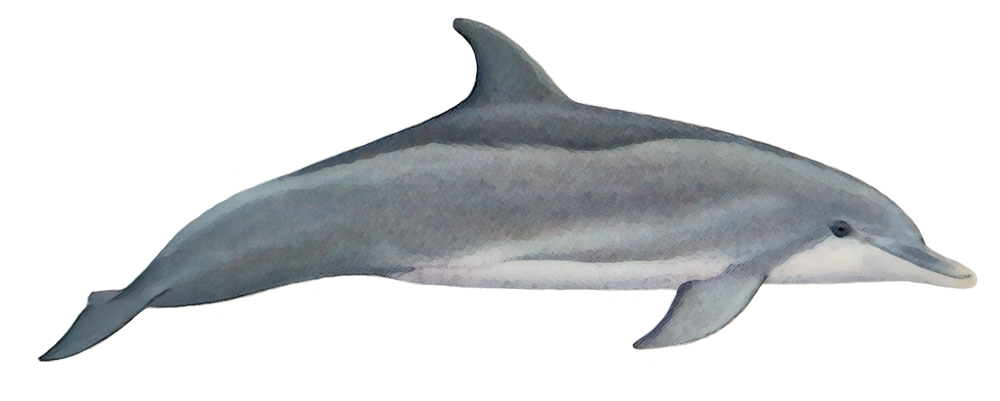
Bottlenose Dolphin Tursiops aduncus
Length: 2.6 – 3.3 meter Weight: 120-190 kg
Features: Snout abruptly narrower than the head. Lower jaw slightly longer than top jaw.
- Forms schools of 20 – 50 individuals.
- Feeds mainly on fish but also squid.
- Bottlenose dolphin mothers give birth to one young dolphin after an entire year of pregnancy.
- These dolphins are the most likely species to interact with humans.
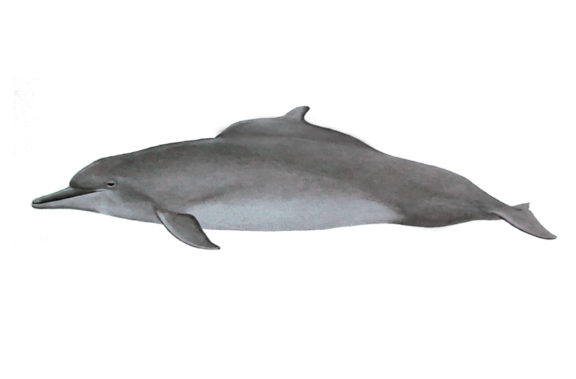
Humpbacked Dolphin Sousa plumbea
Length: 2.8 meter Weight: 280 kg
Features: Has a long, wide hump below its round, pointed dorsal fin.
- Seen in schools of up to 25 individuals
- Feeds on fish.
- Humpbacked dolphins are born after 12 months of pregnancy and continue to nurse from their mothers for several years.
- Total numbers in SA coastal waters are estimated to be in the range of 1,000 to 1,200 adults and juveniles.
- They are a shy species and generally stay away from boats and other human activity.
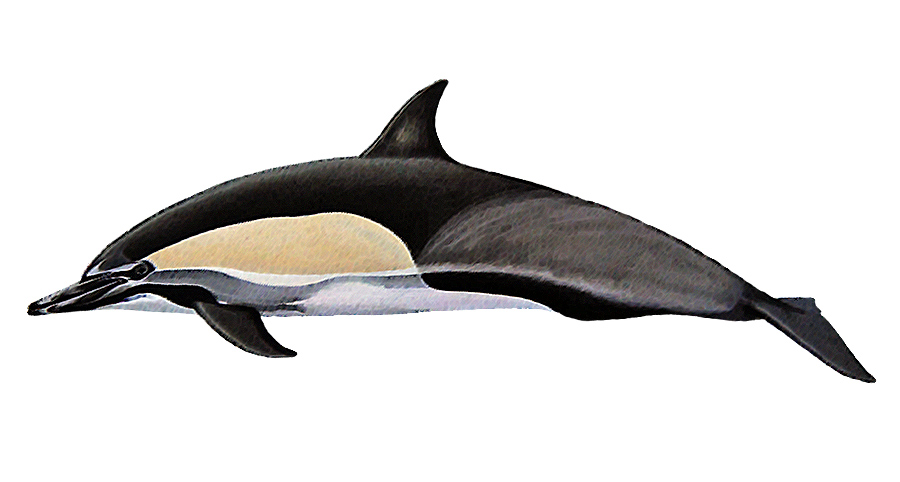
Common Dolphin Delphinus delphis
Length: 2.5 meter Weight: 160 kg
Features:
- Crisscross figure-of-eight pattern on body. Long narrow pointed beak.
- Occur in large schools of up to 5000 individuals. Near land mostly sighted in schools of about 20.
- Feeds on schooling fish, squid and cuttle fish.
- Common dolphins usually live for forty years or longer. Like bottlenose dolphins, common dolphins often swim near humans and boats.
Find more information on: https://www.oceansafrica.com/whales-and-dolphins-of-south-africa/
References:
Branch, G.M., Griffith, C.L., Branch, M.L., Beckley, L.E., (1994) Two Oceans, A guide to the marine life of Southern Africa, David Phillip Publishers (PTY) Ltd., Claremont.
Branch, Margo (Ed.), (2001) Coastcare Fact Sheet Series, Department of Environmental Affairs and Tourism, Cape Town.
Cape Fur Seal (Arctocephalus pusillus)
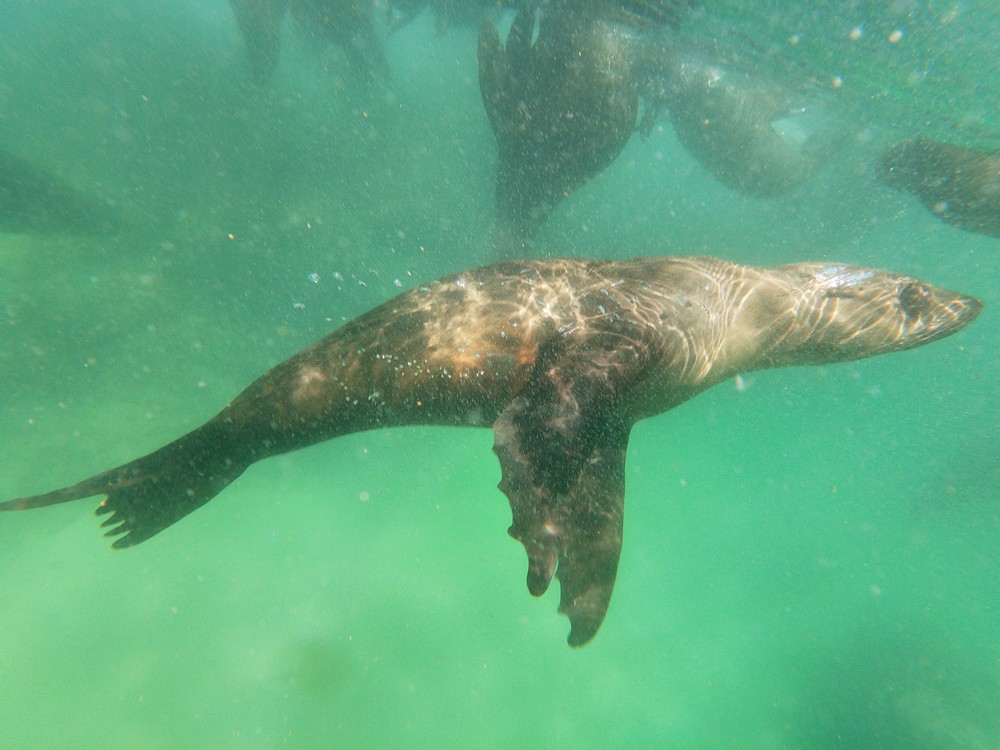
Occasional seals visit our shoreline and can be seen “waving” from the from the water or resting on the rocks at Cape St Francis and sometimes on the beach.
The Cape Fur Seals spend most of their life at sea but need to come ashore to mate and to give birth. The closest colony is located at Black Rocks, which is part of the Bird Island group in Algoa Bay.
- Male adults can grow up to 2.5 m and weigh 300 kg. Females are smaller.
- In October males “haul out” to defend a territory on land and establish a harem of up to 50 females.
- A seal’s fur is brown, but the pups are black when born and only change colour at 4 months. The tick fur and a layer of blubber keep the animals warm.
- Pups start swimming after about 3 months.
- Seals can rotate their back limbs so they can move when not in the water.
- When a pup is born the female will mate soon after, but the embryo will not start to develop until 4 months later. The next sibling will only be born the following year after an 8 months gestation period, very soon after returning to land.
- Seals eat fish, squid, rock lobster and sea birds such as penguins.
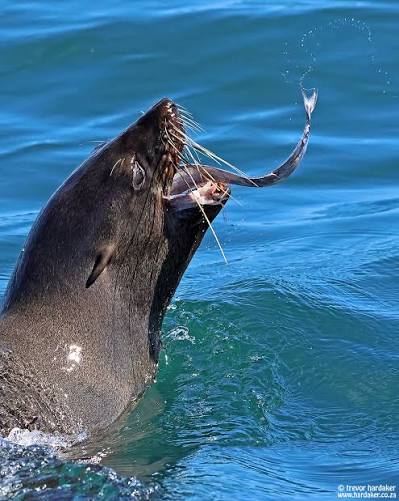
Stranded Seals
If you see a motionless seal on the beach, just give it some time and space and after a day or so it will disappear into the waves once more.
Injured seals should be reported to the Bayworld Stranding Line (071 724 2122).
Dangers to Cape Fur Seals
Unfortunately, seals are often shot by fisherman as it is perceived they interfere with fishing activities. They also become entangled in nets and lines floating in the ocean.
Sealing or the harvesting of seals is prohibited in South Africa but elsewhere seal bulls are killed for export of body parts to the Far East and for blubber oil. The pups are killed for their pelts.
The Cape Fur Seals are not a threatened species.
References:
Branch, G.M., Griffith, C.L., Branch, M.L., Beckley, L.E., (1994) Two Oceans, A guide to the marine life of Southern Africa, David Phillip Publishers (PTY) Ltd., Claremont.
Branch, Margo (Ed.), (2001) Coastcare Fact Sheet Series, Department of Environmental Affairs and Tourism, Cape Town.
Otters

Cape clawless otter relaxing in the dune sand (Photo credit: Trent Simpson, St Francis Bay)

(Photo credit: Alma Botha, Kromme River)
Otters are regularly seen in the greater St Francis area and have largely become synonymous with this part of the coast. They inhabit the wilder areas along the rocky shores of the Cape St Francis point, and the Wildside to the west of the Seal Point lighthouse. They may be seen fishing along the shore towards Oyster Bay and are also regular visitors to the canals and to Port St Francis, where they often shelter at night.
Any patient visitor to these parts may be rewarded with a view of otters foraging in the nearshore waters or coming ashore in the evening to rest up overnight in the coastal bush.
These robust animals are covered in dark brown fur and have flattened tails that they use for swimming. They have rounded heads with large whiskers and slit-like nostrils that can be closed when they dive underwater. They have characteristic light-coloured fur on the chin and chest. Adults reach a length of over 1.25 m. Otters have noticeable webs between their toes on each hind foot and their spoor is unmistakeable because of the absence of claws. Their footprints are commonly found in the dune sand out towards the Cape St Francis point.
Cape clawless otters forage singly or in pairs, searching and diving in the nearshore waters for their favourite prey that includes fish, crabs and the occasional octopus. They deposit characteristic scats (droppings) in latrine areas at intervals on the high-tide rocks along the coast. The scats are easy to identify as they are packed with fish scales and fragmented crab shells.
Two young are born at any time of the year, in a nest burrow that is usually dug under the dense indigenous bush on the slopes inland of the rocky shore.

(Photo credit: Trent Simpson, St Francis Bay)